



How to Create AI Podcast Videos for Free in 2026
The world of content creation is changing faster than ever.
Just a few years ago, creating a professional podcast video required expensive cameras, microphones, editing software, and sometimes even a complete studio setup. Today, artificial intelligence has completely transformed the process.
In 2026, creators can build professional-looking AI podcast videos without showing their face, without hiring a team, and without spending thousands of dollars on equipment.
This new content format is becoming incredibly popular on platforms like YouTube Shorts, Instagram Reels, Facebook, and TikTok because it combines the power of AI-generated visuals with engaging storytelling.
If you’ve ever wanted to start a faceless content channel but didn’t know where to begin, this guide will show you exactly how AI podcast videos are created and why they are becoming one of the biggest trends in digital content.
What Is an AI Podcast Video?
An AI podcast video is a content format where an AI-generated virtual host delivers information, opinions, stories, or educational content in a podcast-style setup.
Instead of recording yourself on camera, you create a digital presenter using AI tools.
The result looks surprisingly realistic and professional.
These videos are commonly used for:
- Educational content
- Technology news
- Motivation channels
- Business podcasts
- AI tutorials
- Storytelling content
- Social media clips
Because the host is AI-generated, creators can produce content quickly while maintaining a consistent visual identity.
Why AI Podcast Videos Are Growing So Fast
There are several reasons why creators are moving toward AI-powered podcast content.
No Need to Show Your Face
Many people want to start content creation but feel uncomfortable appearing on camera.
AI podcast videos solve this problem by allowing a virtual host to represent your brand.
Cost-Effective Content Creation
Traditional podcast production can be expensive.
AI tools dramatically reduce costs by handling:
- Visual generation
- Script assistance
- Voice creation
- Basic video production
This makes content creation more accessible to beginners.
Faster Production Workflow
Instead of spending hours recording and editing, creators can focus on ideas and storytelling.
This allows more content to be produced in less time.
Strong Viral Potential
AI-generated content naturally attracts curiosity.
People are often fascinated by realistic AI hosts, making these videos highly engaging on social media platforms.
Step 1 – Create or Find a Podcast-Style Character
Every successful AI podcast starts with a strong visual identity.
Many creators begin by collecting inspiration from podcast setups, influencer photos, and studio-style images.
Look for references that include:
- Professional microphones
- Podcast studio backgrounds
- Modern lighting
- Confident presentation styles
The goal is to create a virtual host that feels trustworthy and engaging.
Step 2 – Generate a Unique AI Influencer
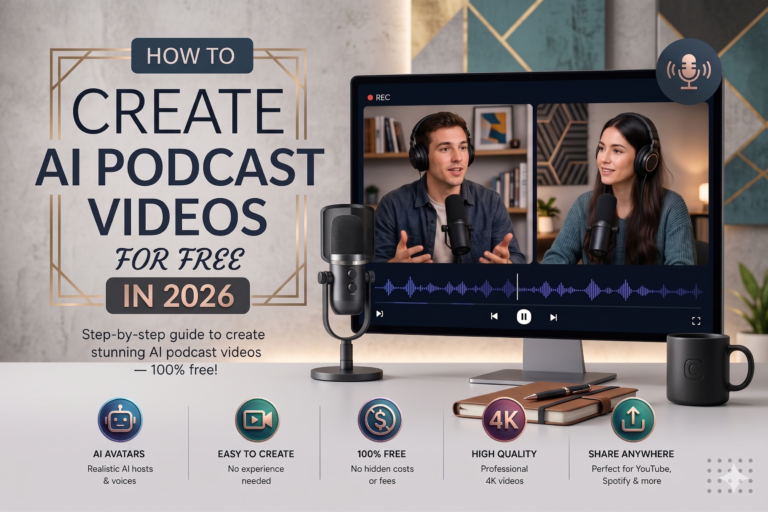
After finding inspiration, use AI image generation tools to create a completely original character.
A unique AI influencer offers several advantages:
✔ Original branding
✔ Better audience recognition
✔ Reduced copyright concerns
✔ Long-term content consistency
Many successful creators use the same AI host across hundreds of videos to build a recognizable brand.
Step 3 – Design Your Podcast Setup
The visual environment matters just as much as the AI host.
A professional podcast setup often includes:
- Microphones
- Headphones
- Studio lighting
- Modern backgrounds
- Podcast logos
- Branded colors
These small details make videos look more credible and professional.
Step 4 – Generate Content Ideas
One of the biggest advantages of AI is idea generation.
Popular AI podcast topics in 2026 include:
Technology News
New gadgets, AI tools, and software updates continue to attract large audiences.
Business & Finance
People are always searching for ways to improve their income and financial knowledge.
Motivation & Self-Improvement
Personal growth content remains one of the most popular categories online.
AI Tutorials
Artificial intelligence continues to dominate online discussions and searches.
Trending News & Updates
Quick, informative videos about current events often perform extremely well.
Step 5 – Create an Engaging Script
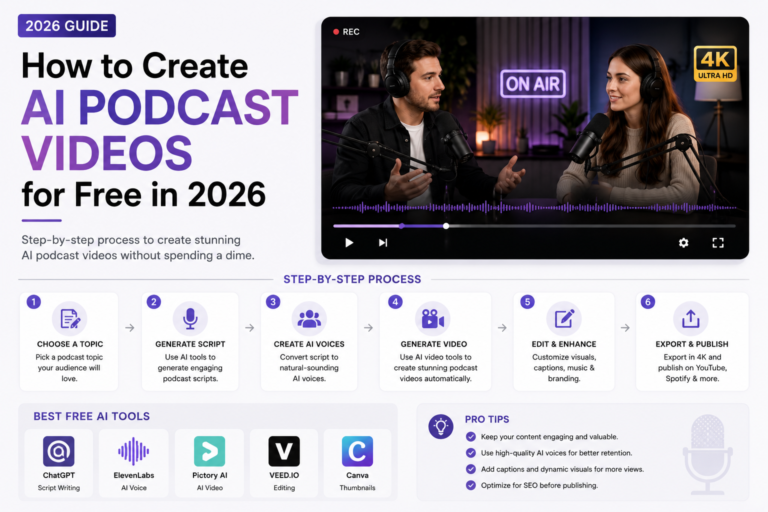
A great AI podcast is built on a great script.
The most successful creators avoid publishing raw AI-generated text.
Instead, they:
- Add personal insights
- Include opinions
- Simplify difficult topics
- Improve storytelling
- Add humor where appropriate
This creates content that feels more authentic and engaging.
Remember:
People connect with personality, not just information.
Step 6 – Convert Your Script into Video
Once your script is ready, it’s time to bring your AI host to life.
Modern AI video tools can transform a static image into a speaking presenter.
These systems synchronize:
- Facial expressions
- Lip movements
- Head movements
- Voice delivery
The result feels remarkably natural.
This technology has improved dramatically over the past few years and continues to become more realistic.
Step 7 – Choose the Right Video Format
Different platforms require different formats.
Vertical Videos (9:16)
Best for:
- YouTube Shorts
- Instagram Reels
- TikTok
These formats generally receive higher reach and engagement.
Horizontal Videos (16:9)
Best for:
- Traditional YouTube videos
- Podcasts
- Educational content
Choose the format that matches your content strategy.
How to Monetize AI Podcast Videos
Many creators ask whether AI podcast channels can generate revenue.
The answer is yes, but quality matters.
Some common monetization methods include:
YouTube Ad Revenue
Consistent, original content can qualify for monetization if it follows platform policies.
Affiliate Marketing
Promoting useful products and tools can create additional income streams.
Brand Sponsorships
Brands often partner with creators who have active and engaged audiences.
Digital Products
Many creators sell:
- Courses
- Templates
- E-books
- AI prompts
through their content ecosystem.