






Edge Computing is the Future of Home PC Security in Windows 12
Hey tech guardians! Welcome back to Technical Kachhua. In 2026, our homes are getting smarter, and our PCs are running Windows 12—an operating system built from the ground up for AI. With features like Windows Recall, Copilot+, and advanced local AI processing, our computers are more powerful than ever. But with all this “smartness,” comes a crucial question: How do we keep it secure?
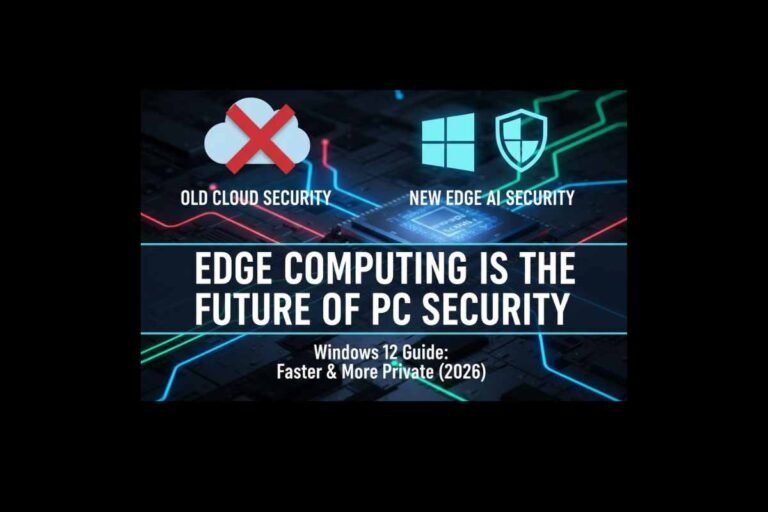
Traditionally, most of our security has relied on the “cloud.” Your antivirus sends suspicious files to a remote server, your smart cameras upload footage to a data center, and every threat analysis needs a good internet connection. This cloud-centric approach often means slower response times, potential privacy concerns, and vulnerability during internet outages.
But what if I told you that the future of home PC security isn’t in a far-away data center, but right here, at the “edge” of your network, powered by Windows 12? Today, we are diving deep into Edge Computing and why it’s going to be the most important thing for protecting our home PCs in 2026 and beyond, especially with Windows 12 leading the charge.
What is "Edge Computing" (Windows 12 Edition)?
In simple terms, Edge Computing means data processing and analysis happens closer to the source of the data. For your home PC, “the edge” is your computer itself, your router, or any smart device directly within your home network.
With Windows 12, this “edge” is getting much smarter. Your AI PC’s NPU (Neural Processing Unit) and advanced software can now handle complex security tasks locally, without constantly sending everything to the cloud.
Why Edge Computing is a Game-Changer for Windows 12 Home Security
1. Instant Threat Detection with NPU Power
Old Way (Cloud): A new virus attacks. Your antivirus sends a sample to the cloud. The cloud server analyzes it, and sends a “stop” command back. This takes precious seconds.
Windows 12 Edge Way: Your Windows 12 PC’s NPU is designed for lightning-fast AI tasks. Security software leveraging the NPU can analyze suspicious files or network packets instantly on your device. It’s like having a super-fast, always-on security guard inside your PC. This real-time, zero-latency detection is critical for stopping “zero-day” attacks.
2. Unprecedented Privacy for AI Features
Old Way (Cloud): Your voice commands, smart camera footage, and even your typing patterns for AI writing assistants often go to cloud servers for processing.
Windows 12 Edge Way: Features like Windows 12’s Recall (which logs your PC activity) are designed to keep that data local on your device. Edge security extends this principle. Your NPU can analyze sensitive information (like biometric data from a webcam or content of a document) on your PC without uploading it. This dramatically reduces the risk of data breaches and enhances your personal privacy.
3. Resilience Against Internet Outages
Old Way (Cloud): If your internet goes down, your cloud-based antivirus can’t get updates, your smart locks might lose features, and remote monitoring stops. You are vulnerable.
Windows 12 Edge Way: An Edge-powered home security system, tightly integrated with Windows 12, can operate independently. Your AI PC continues to protect against malware, and an AI-enabled home router can still monitor internal network traffic for anomalies, even with no internet connection. This “offline-first” security is crucial.
4. Smarter Protection for IoT Devices (Windows 12 Network Integration)
Old Way (Cloud): Your smart fridge, light bulbs, and security cameras are often managed by different cloud services, creating security gaps. They are easy targets.
Windows 12 Edge Way: Future Windows 12 updates will likely enhance network-level AI. Your AI PC can act as a central hub for all IoT device security. An AI algorithm (potentially running on your NPU or a smart router) can learn the “normal” behavior of every smart device. If a compromised smart bulb tries to communicate with a suspicious server, your Windows 12 PC or router detects and blocks it instantly.
5. Advanced Behavioral Analysis (The Power of NPU Learning)
Old Way (Cloud): Traditional antivirus mostly looks for known virus “signatures.”
Windows 12 Edge Way: With its NPU, Windows 12 can run sophisticated machine learning models locally to analyze file behavior and network patterns. It can learn what’s “normal” for your specific PC and alert you to abnormal activities, even from entirely new, unknown threats (zero-day attacks). This is proactive, self-learning security right on your device.
The Role of Your Windows 12 AI PC
Your new Windows 12 laptop or desktop with its NPU is perfectly positioned to be the central pillar of your edge computing security. Its local AI processing power, combined with Windows 12’s deep integration, creates a robust, private, and fast security layer that traditional cloud solutions struggle to match.
Conclusion
Edge Computing is not just a fancy term; it’s a necessary evolution for home PC security in the AI era. With Windows 12 pushing the boundaries of local AI processing, our personal computers are becoming smarter, faster, and more private guardians against cyber threats.
By embracing this shift, we move towards a future where our devices protect themselves with lightning speed and without compromising our privacy. Are you ready for your Windows 12 PC to become your ultimate edge security guardian? Tell me your thoughts in the comments below!
Thanks for reading Technical Kachhua. Stay safe, stay smart, and embrace the edge!



Pingback: 5 Best AI Chrome Extensions for Productivity on Windows 12